OOakfield FarmHOG & LAMB ROASTS
From the Farm  /  Bees & honey

The day the tree
started humming.

A swarm in the branches, an extraordinary walk into a hive, and a surprisingly long road to a spoonful of honey.

Follow the bees ↓
Oakfield Farm · Field notesA year among the hives
01 / A very busy day

There's busy.
And then there's bee busy.

Every so often the farm delivers something you couldn't organise if you tried. You look up at a tree and discover that a substantial number of bees have decided to hold a meeting in it.

That's what happened here. A swarm gathered among the branches, hanging together in a dark, moving cluster. It's one of those sights you can photograph, but it doesn't quite convey the sound.

The fascinating part was what happened next. From a branch in a tree to the entrance of a new hive — and, eventually, all the quieter work that goes into keeping bees well.
The swarm clustered in the branches at Oakfield.
02 / First, the swarm

A temporary address in the tree.

At first glance it looks like a rather alarming mass of insects. But swarming is a normal part of honey-bee life: a colony divides and part of it heads off to find a new home.

A settled swarm can hang in a cluster while scout bees look for somewhere suitable. Quite the house-hunting party, really — just with considerably more legs.

A fact worth knowing

A honey-bee swarm can involve thousands of bees. The British Beekeepers Association explains that swarms often settle into a cluster fairly quickly while searching for a new home. Read their guide.

03 / Moving day

Would you mind walking this way?

The next photograph is one of my favourites: a great mass of bees making its way over a sheet and into a hive. It's mesmerising to watch so many individuals apparently agree on a destination.

There's a temptation to think you're directing proceedings. The bees might take a rather different view.

This is a record of what happened on the farm, not a do-it-yourself guide to collecting swarms. If you find one, the sensible thing is to leave it alone and contact an experienced beekeeper.

From the branches to their new front door.
04 / Inside the hive

A world built in hexagons.

Look closely at the comb and it's hard not to admire the organisation. Those wax cells aren't all doing the same job. A colony uses comb to rear young bees and store pollen and honey. The colours and textures vary from cell to cell.

Look closely: a whole patchwork of colours and textures inside the comb.

Another interesting detail

Bees make honey by processing nectar, reducing its water content and storing it in wax cells. Once it is ready, the cells are capped. The BBKA explains the process.

05 / The work in between

It isn't all honey and sunshine.

There are inspections, decisions and jobs to do throughout the beekeeping year. This is the less glamorous work that rarely makes it onto a jar label.

01
Checking the colony

Watching how the bees are doing, with a careful eye on the brood and stores.

02
Finding and marking the queen

One bee in a great crowd. Easier said than done, but it helps with future inspections.

03
Seasonal care

Feeding when needed and dealing with pests and disease as part of responsible hive management.

From a branch to a jar
The bees do the difficult bit. We just try to keep up.
06 / And something to eat

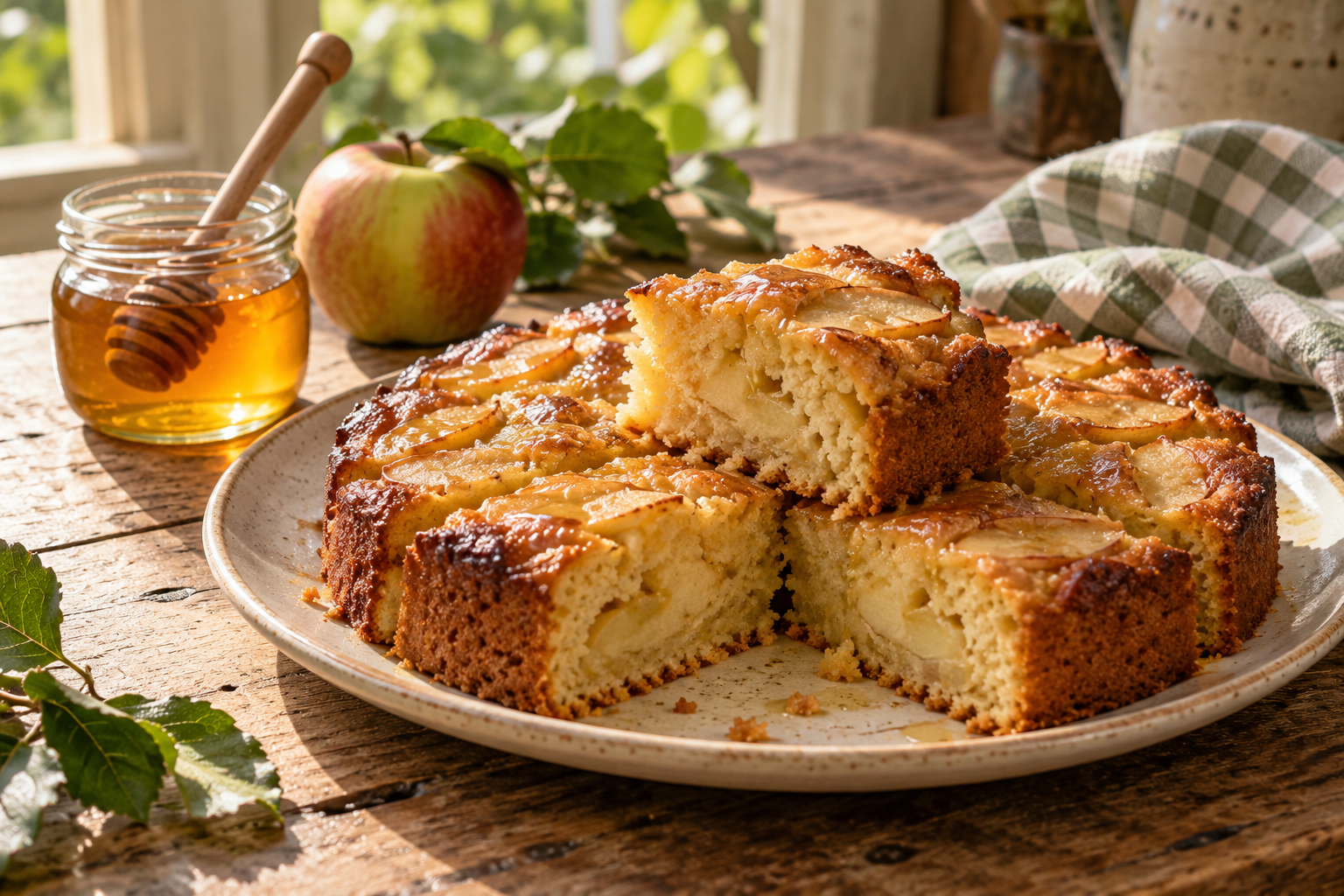
Honey & apple cake.
Two farm stories in one slice.

Honey from the hives, apples from the orchard — a rather nice meeting of two Oakfield subjects, and a very good excuse for tea.

Jump to method ↓
Illustration of a homemade honey and apple cake with a jar of honey
Honey and apple cake, ready for slicing.
About 9 squares20 min hands-on35–45 min baking

What you'll need

  • 200g unsalted butter, softened
  • 100g light soft brown sugar
  • 100g runny honey, plus 2 tbsp for glazing
  • 3 large eggs
  • 220g self-raising flour
  • 1 tsp ground cinnamon
  • 2 medium eating apples, cored and thinly sliced
  • A splash of milk if needed

How to make it

  1. Heat the oven to 180°C / 160°C fan. Grease and line a 20cm square cake tin.
  2. Cream the butter and sugar until light. Beat in the honey, then the eggs one at a time.
  3. Fold in the flour and cinnamon. Add a splash of milk if the mixture is very stiff.
  4. Spoon into the tin, smooth the top and lay the apple slices over it. Bake for 35–45 minutes, until golden and a skewer inserted into the centre comes out clean.
  5. Warm the extra honey slightly and brush over the warm cake. Leave to cool before cutting into squares.
A working farm, proper food

And yes, we do catering too.

Behind the bees, geese, sheep and experiments there's also the Oakfield Farm catering business. We cook hog and lamb roasts for events, cook at the farm for delivery and hire out roasting machines. If you're planning something, we'll be happy to discuss it.

See our food & catering ↗